
The Ultimate Guide to Cockpit Cameras for Pilots: Capture Your Flight Experience
Some links on this site are affiliate links, including Amazon Associates and other affiliate programs. If you buy through them, PhotoCultivator may earn a commission at no extra cost to you. As an Amazon Associate I earn from qualifying purchases.
As a pilot, you have the privilege of experiencing breathtaking views from the cockpit.
Whether you’re flying cross-country, visiting unique locations, or navigating unusual weather conditions, capturing these moments can be challenging without the right equipment.
Here are the best cockpit cameras for pilots in 2024, along with essential tips and recommendations to help you document your aviation journey.
Why Use a Cockpit Camera?
Before exploring the gear, let’s see why cockpit cameras are becoming increasingly popular among pilots:
- Preserving memories: Capture stunning views and memorable moments from your flights.
- Training and self-improvement: Review your flights to analyze your performance and identify areas for improvement.
- Sharing experiences: Create engaging content for social media or aviation communities.
- Safety documentation: Record flights for potential incident analysis or insurance purposes.
Top Cockpit Cameras for Pilots
Action Cameras
Action cameras are the most popular choice for cockpit recording due to their compact size, durability, and excellent video quality.
1. GoPro HERO10 Black
The GoPro HERO10 Black stands out as the best overall option for pilots:
- 5K video at 60fps
- Best-in-class stabilization
- Responsive touch controls
- Intuitive interface
- Excellent battery life
While it’s priced under $500 (often discounted to $400), the HERO10 Black offers unparalleled performance for both novice and experienced aviators.
For more on GoPro cameras, check out my GoPro Guide for Beginners and Pros.
2. Garmin VIRB Ultra 30
A close second to the GoPro, the Garmin VIRB Ultra 30 offers:
- 4K 30fps video
- Built-in GPS and external sensors
- Propeller filter to remove distortion
- Waterproof case included
- Competitive price point (under $400)
While it has slightly lower video quality than the GoPro, the Garmin VIRB Ultra 30 includes aviation-specific features that make it an attractive option for pilots.
3. AKASO EK7000 4K Wi-Fi Sports Action Camera
For pilots on a budget, the AKASO EK7000 offers:
- 4K video capability
- Wi-Fi connectivity
- Affordable price point
While it may not have all the bells and whistles of higher-end models, it’s a solid choice for those looking to start recording their flights without breaking the bank.
360-Degree Cameras
For a more immersive recording experience, consider a 360-degree camera:
1. GoPro MAX
The GoPro MAX offers:
- 360-degree video capture
- 5.6K resolution
- Advanced stabilization
- Versatile mounting options
2. Insta360 ONE X3
Another excellent 360-degree option:
- 5.7K 360-degree video
- FlowState stabilization
- Waterproof design
- Innovative editing features
Key Features to Consider
When choosing a cockpit camera, keep these factors in mind:
- Video Quality: Look for at least 4K resolution for crisp, detailed footage.
- Image Stabilization: Essential for smooth video in turbulent conditions.
- Battery Life: Longer battery life ensures you can capture entire flights.
- Ease of Use: Simple controls are crucial when you’re focused on flying.
- Mounting Options: Ensure the camera can be securely mounted in your cockpit.
- Audio Quality: Clear audio capture is important for recording communications.
Tips for Successful Cockpit Recording
- Clean your windows: Ensure both the inside and outside of your cockpit windows are clean for the best clarity.
- Avoid lens contact with glass: To prevent vibration transfer, don’t rest the camera lens directly on the window.
- Shoot in RAW: For the highest quality and most flexibility in post-processing, shoot in RAW format when available.
- Manage haze: Use post-processing tools to reduce haze and improve clarity in your footage.
- Use a fast, wide, stabilized lens: This helps combat camera shake, especially in vibrating aircraft.
- Be mindful of shutter speed: If shooting through a propeller, use a shutter speed below 1/125th of a second to blur the prop.
For more tips on optimizing your camera settings, see our Ultimate Guide to Camera Settings.
Mounting Your Camera in the Cockpit
Proper mounting is crucial for stable footage and safety. Here are some options:
Suction Cup Mounts
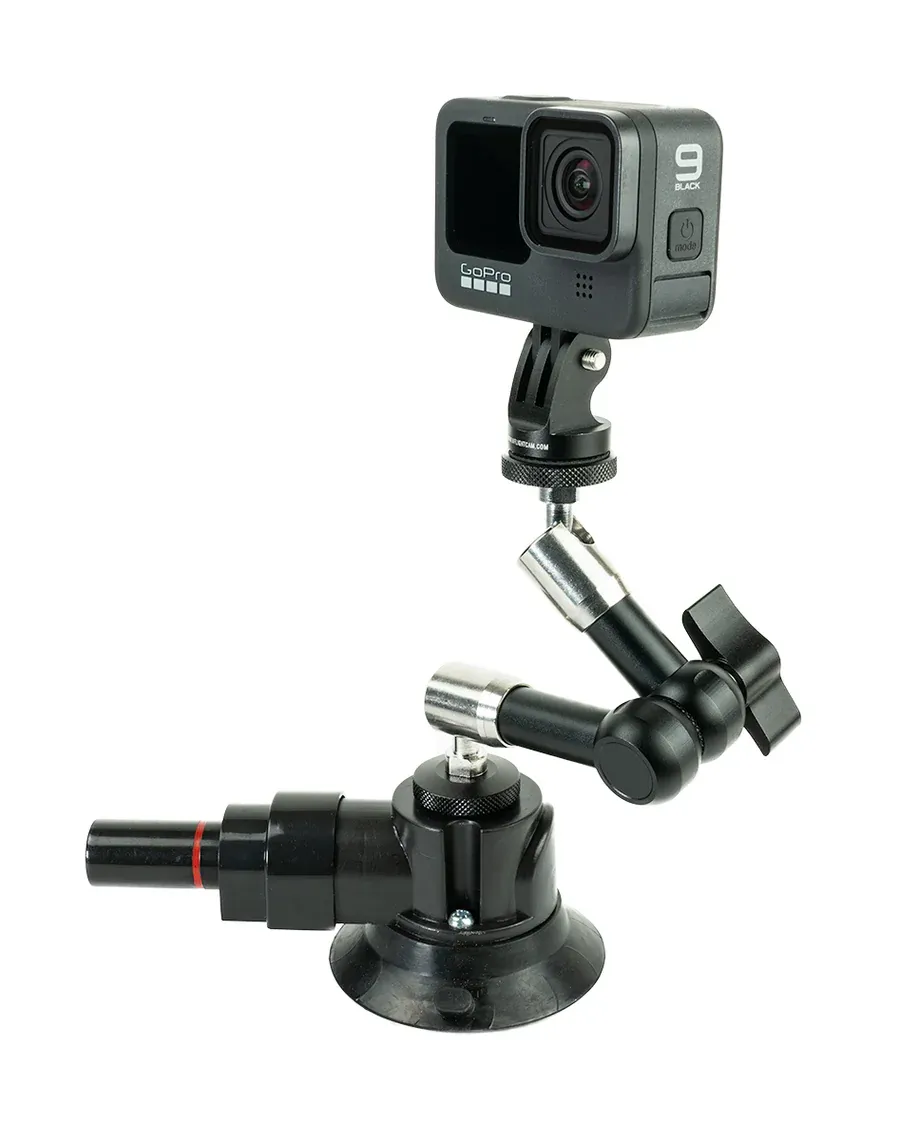
Ideal for temporary installations in both small and large aircraft. Use high-quality suction cups designed for camera mounting.
- Recommendation: NFlight Cam Ultimate Cockpit Suction Cup. This mount has a larger boom arm for a wider range of motion and a gauge to show if it’s losing grip, allowing you to re-secure it mid-flight.
Adhesive Mounts
For more permanent installations in personal aircraft. Be cautious as they may damage paint and never use these on rental aircraft.
- Recommendation: GoPro Flat and Curved Adhesive Mounts. These mounts are strong but should only be used on aircraft you own due to potential paint damage.
Ceiling Mounts
In small aircraft, consider mounting a camera to the ceiling for a great view of the instrument panel and front window.
- Recommendation: MyPilotPro Swivel GoPro Mount. This mount is versatile and can be attached to various interior surfaces, providing a stable and adjustable platform for your camera.
Window Mounts
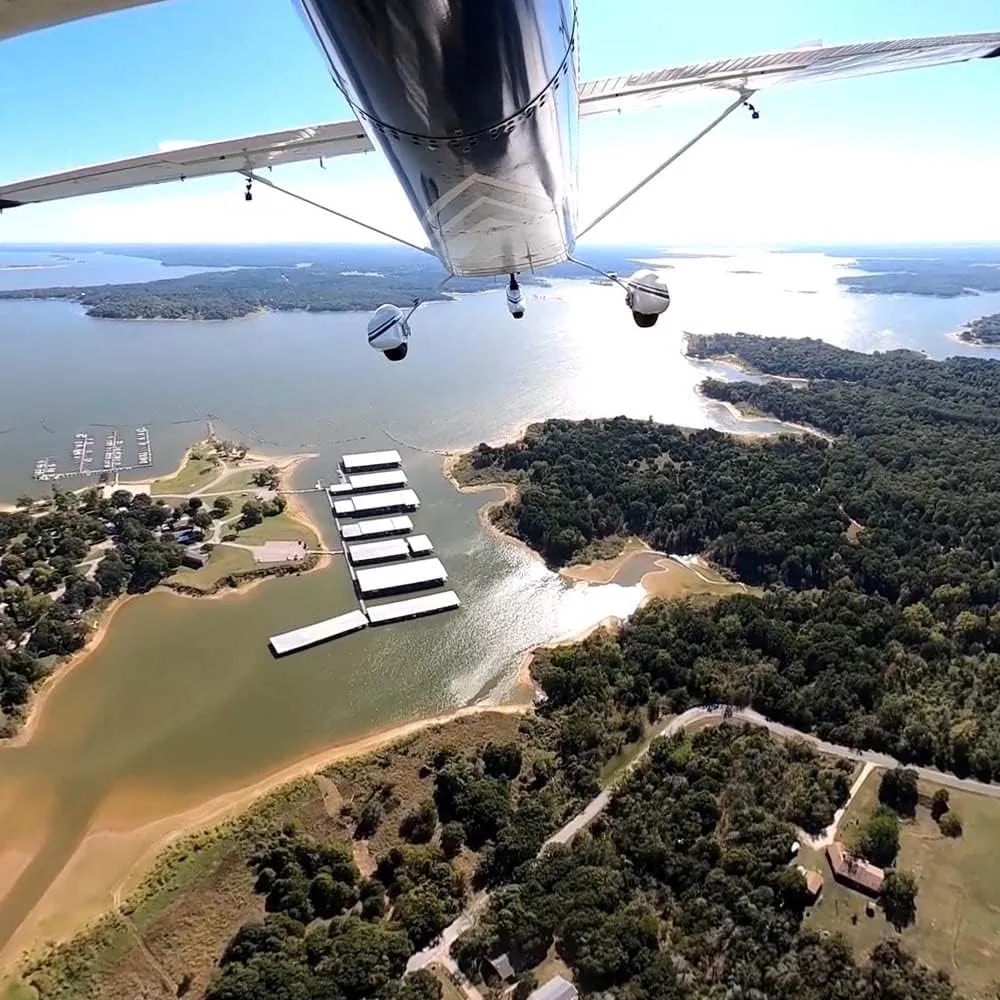
For commercial aircraft, specialized window mounts are available that fit between the window and the shade.
- Recommendation: MyPilotPro GoPro Mount for Windows. This mount is designed to fit securely in the window frame without causing damage or obstruction.
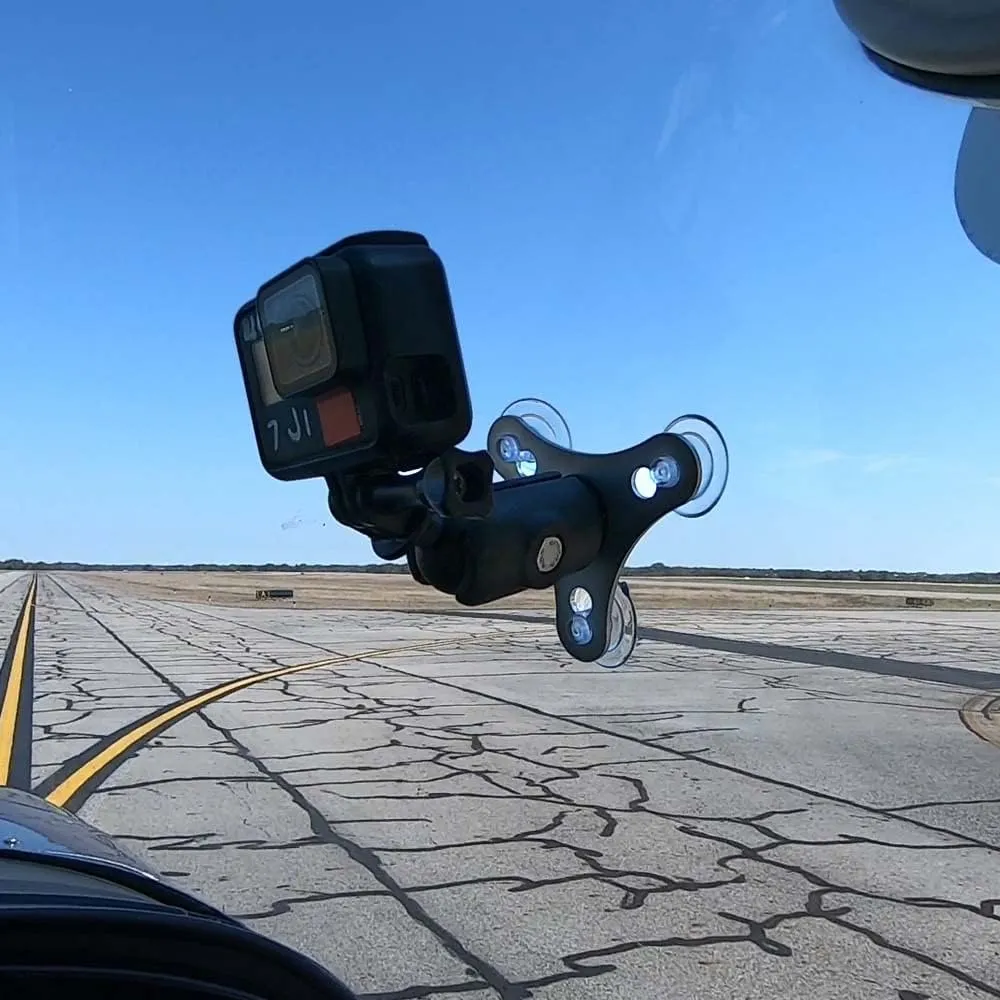
Always ensure your camera is securely attached and doesn’t obstruct your view or access to any controls.
Comply with airline policies and aviation authority regulations, especially for commercial flights.
Improving Your Footage with Post-Processing
Once you’ve captured your flight footage, post-processing can improve the final product.
Use software like Adobe Premiere Pro, Final Cut Pro, or DaVinci Resolve for video editing.
These tools offer features like color correction, stabilization, and audio enhancement, which can make your videos more professional and engaging.
For more on post-processing, see my best Editing Techniques
Insurance Considerations
When mounting cameras in aircraft, it’s essential to consider insurance implications.
Some insurance policies may have specific clauses regarding modifications or additional equipment in the cockpit.
Always check with your insurance provider to ensure that your camera setup complies with your policy and doesn’t void your coverage.
For more details, see my article on Best Camera Insurance for Photographers.
And That’s It
Investing in a quality cockpit camera can greatly improve your flying experience, allowing you to capture and share the unique perspective of a pilot.
Whether you choose a high-end action camera like the GoPro HERO10 Black or a more budget-friendly option, the key is to find a camera that fits your needs and doesn’t interfere with your primary focus: safe and enjoyable flying.
The best camera is the one you’ll actually use.
Start with what you’re comfortable with, and experiment with different settings and mounting positions to find what works best for you.
-Hakan.